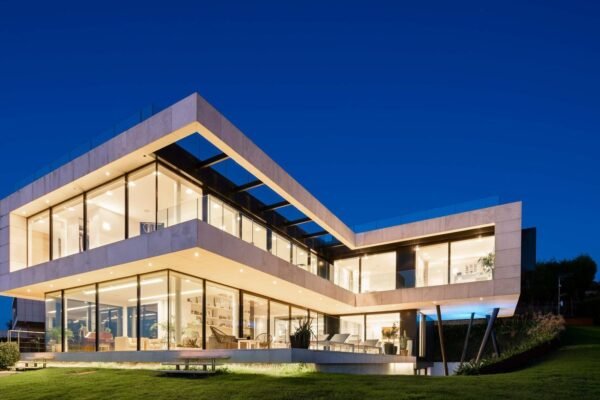
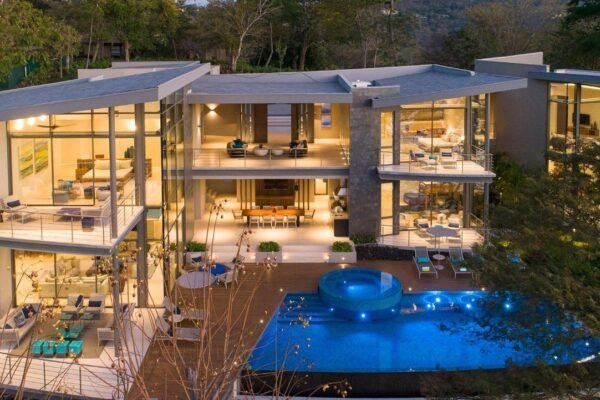
A fixed aluminium light gives you more glass, no opening joint for air, dust or noise to find, and a size limited by the glass rather than by the hinges. An opening light gives you air when you want it and a way to clean the outside pane from inside, at the cost of a deeper frame and a seal line that has to stay tight for the life of the building. In a Dubai villa, where the Dubai Building Code says natural ventilation “shall not be relied upon to provide ventilation and thermal comfort”, the sound rule is to open only the panes you will actually use, and to fix the rest.
That sounds obvious. Yet elevations still reach our Al Qusais factory with every pane drawn as a casement or tilt-and-turn, often because the opening type was chosen before anyone asked what each window is for. This guide sets out what an opening light really costs and what the code actually requires, so the fixed-or-opening decision can be made pane by pane.
What actually changes when an aluminium window opens?
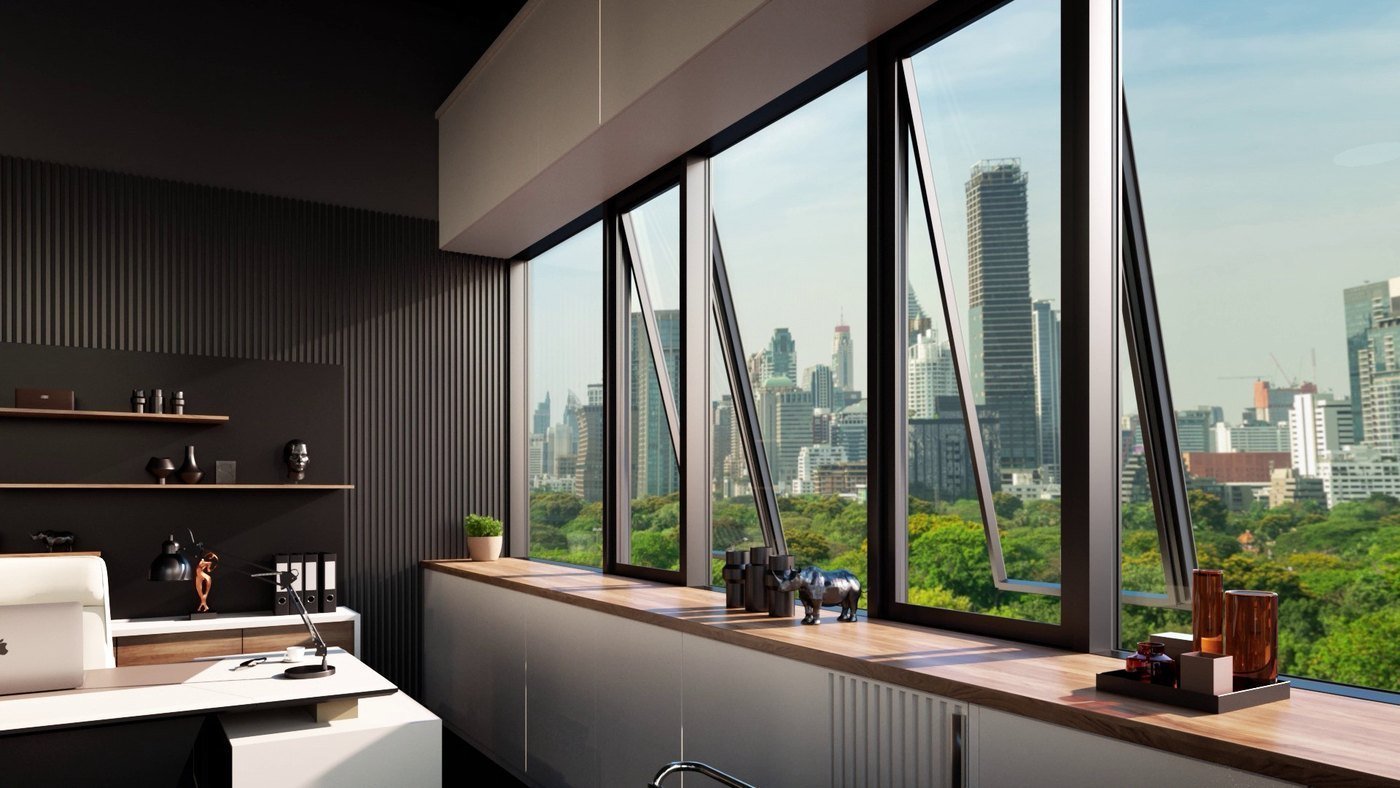
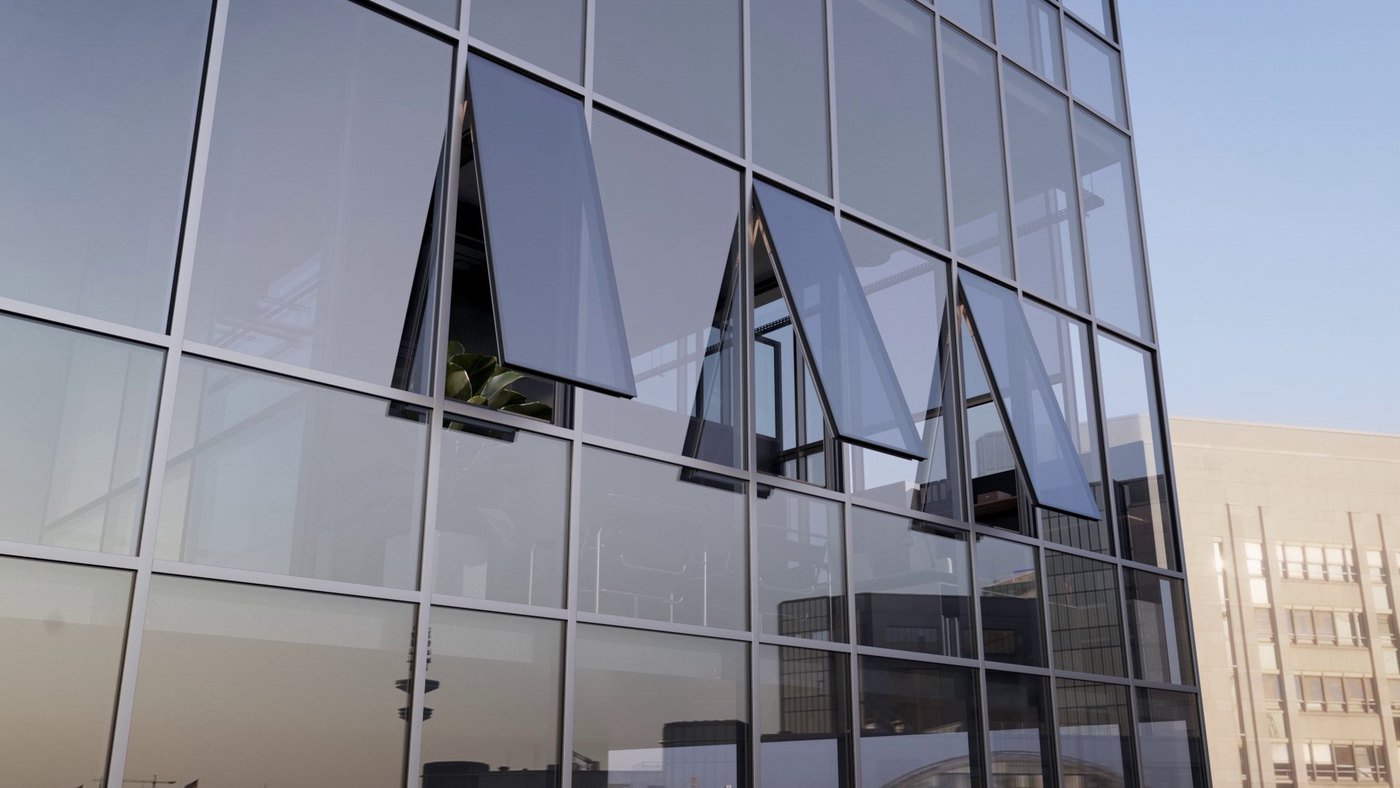
A fixed light is one profile: the outer frame, with the glass glazed straight into it. An opening light is two: the outer frame plus a sash that carries the glass, with hardware, a second set of gaskets and a perimeter joint between the two. Four things follow from that second profile.
- The frame gets deeper on the face. On the Altest WS75 system, the manufacturer’s published minimum visible frame height is 38 mm for the outer frame and 66 mm for frame with sash. The sash costs almost 30 mm of glass on every edge where it runs.
- An opening joint appears. Every metre of sash perimeter is a seal line that has to resist air, water and wind. EN 12207 classifies air permeability partly per metre of this joint.
- Hardware limits the size. The same WS75 data sheet caps a sash at 1,700 mm wide, 2,700 mm high and 160 kg. A fixed light has no hinge or stay to carry its weight in motion, so its size is set by the glass, the frame’s structural capacity and wind load.
- There is something to maintain. Hinges, multi-point locks and gaskets work over time. A fixed light’s gaskets only have to stay put.
How much glass do you lose to an opening sash?
The clearest way to see the cost is a worked example. Assumptions: a 1,200 × 1,500 mm window (1.80 m²) in the Altest WS75 system; the fixed version shows the 38 mm minimum frame on all four sides; the opening version is a single side-hung or tilt-and-turn sash showing the 66 mm minimum frame-with-sash on all four sides. Real sightlines vary with configuration, so treat this as an illustration of scale, not a quotation.
| Same 1.80 m² opening | Fixed light | Opening light |
|---|---|---|
| Visible frame on each edge | 38 mm | 66 mm |
| Visible glass | 1,124 × 1,424 mm = 1.60 m² | 1,068 × 1,368 mm = 1.46 m² |
| Frame as a share of the window | 11% | 19% |
| Opening-joint length | None | 5.4 m |
| Air leakage permitted at 100 Pa, EN 12207 Class 4, joint basis (0.75 m³/h per metre) | No opening joint to measure | ≈ 4.1 m³/h |
| Same, at Class 2 (6.75 m³/h per metre) | No opening joint to measure | ≈ 36 m³/h |
On these assumptions, the opening version gives up about 0.14 m² of glass, roughly 9% of the view, and adds 5.4 m of seal line. On a single window that is modest. Across a villa with forty windows it is the difference between an elevation that reads as glass and one that reads as frame.
Is a fixed light always the more energy-efficient choice in Dubai?
Not automatically, and the reason is worth understanding before anyone sells you a fixed light on thermal grounds alone.
U-value cuts both ways. Under EN ISO 10077-1, the whole-window U-value is an area-weighted blend: Uw = (AgUg + AfUf + lgψg) ÷ (Ag + Af). More frame pulls Uw toward the frame’s Uf, more glass pulls it toward the glass’s Ug. Whether swapping frame for glass helps depends on which of the two is lower. The thermally broken systems on our aluminium windows page publish Uf values from 0.71 to 1.7 W/m²K, which overlaps the range of good insulating glass units. So there is no blanket answer; it has to be calculated for the actual system and glass.
Solar gain runs the other way. In Dubai the larger load is usually solar heat through the glass, not conduction. Glass with the same g-value admits solar heat in proportion to its area, so in the example above the fixed light lets in roughly 9–10% more direct solar gain than the opening light, simply because it has more glass. On a west elevation that matters. It is one reason Al Sa’fat tightens the glazing shading coefficient as the window-to-wall ratio rises, a rule covered in our Al Sa’fat glazing guide.
Air leakage is where fixed lights clearly win. A fixed light has no opening joint, so the main leakage path that EN 12207 classifies simply isn’t there. Each opening light adds that path back, and in Dubai the air it lets in is hot, humid and often dusty. As our air-tightness guide sets out, Class 4 keeps that small, but small is not zero, and it holds only while the gaskets and hardware stay adjusted. What leakage remains around a fixed light is mainly at the glazing seal and the frame-to-wall joint, which are an installation question, not a product one.
The honest summary: fixing a pane reliably removes an air, dust and noise path and lets the glass go larger; it does not automatically lower the cooling load, because it also adds glass. The energy case for a fixed light is real, but it rests on air-tightness, not on U-value.
Does the Dubai Building Code require windows to open?
For a villa, the short answer is: you must provide some openable windows, but the code does not make them your ventilation system, and it sets no minimum openable area.
Three clauses fit together. Al Sa’fat, Dubai’s green building regulation (2nd edition, January 2023), states at §401.05 Openable Windows: “For all new buildings, openable windows must be provided in accordance with part H of Dubai Building Code, H.4.11 Natural ventilation and part K. For villas, Part K, K.10.1.7 Natural ventilation must be followed.”
The clause it points to, Dubai Building Code §K.10.1.7, reads: “Natural ventilation of occupied spaces via windows, doors or other openings is permitted but shall not be relied upon to provide ventilation and thermal comfort. The operating mechanism for such openings shall be accessible so that the openings are readily operable by the building occupants.”
And the villa daylight clause, §K.5.4.2.1, requires bedrooms, living rooms and kitchens to have “windows with net glazing area not less than 10% of the habitable space floor area”. That is a requirement for glass, not for opening glass, and a fixed light meets it fully.
Read together: ventilation and comfort in a Dubai villa are the mechanical engineer’s job, and openable windows are a supplement the occupants must be able to reach and use. That is why we design to “a usable vent where it serves the room” rather than “every pane opens”. An opening light set too high to operate does not meet the intent of K.10.1.7, and one that is never opened is just a fixed light with a longer seal line.
The same chapter makes the mechanical route explicit. §K.10.1.8.1 requires that “a mechanical exhaust system, supply system or combination thereof shall be installed to operate for each villa or townhouse unit to provide ventilation with outdoor air in accordance with ASHRAE 62.2-2019”, with local exhaust in kitchens, bathrooms and toilets. Al Sa’fat §401.01 says the same for every air-conditioned building. Fresh air is therefore delivered by the system whether or not a single window is opened.
Where must an opening light sit for safety?
The villa chapter of the Dubai Building Code sets the height. §K.5.4.2.1(b): “The operable portion of the window shall be positioned at a safe height. The window sill shall be positioned at a height of not less than 900 mm from the interior FFL.” Where a window has a mechanical opening means, §K.5.4.2.1(a) places it “at a height between 900 mm to 1,500 mm from the room FFL”.
The code’s general building-envelope chapter goes further for the buildings it covers. §E.9.4 requires sliding and operable windows to sit at least 900 mm above floor level and states that “operable windows shall be restrained to limit the opening to 100 mm to prevent falls”, with no construction features beneath the window that could be used as a ladder. Villas are designed to Part K, but on any upper-floor window where children are present, we recommend a 100 mm restrictor whether or not it is mandatory. Beside a swimming pool the villa chapter is stricter still: §K.5.8.2.1 requires operable windows there to have a sill of at least 1,200 mm.
The practical consequence for design is simple. Glass that runs down toward the floor is either a fixed light or a door; the opening vent goes in the zone above 900 mm. This is one of the strongest arguments for the mixed elevation: a full-height window with a fixed lower light and an opening vent above meets the sill rule without giving up the floor-to-ceiling view. Note that the low fixed light is not exempt from safety rules of its own: under §K.7.6.2, glazing below 800 mm that protects a drop of more than 760 mm must provide containment, so on an upper floor it is specified as a guarding pane, not just a window.
Which panes should open in a Dubai villa?
Our working rule is to start from fixed and justify every opening, rather than start from opening and fix what can’t open. The justification is usually one of three things: air you will actually use, cleaning access, or a door function. A typical villa sorts out like this:
| Location | Our usual recommendation | Why |
|---|---|---|
| Double-height living room, stair void | Fixed, with any vent at reachable height | Large glass and no reachable handle; a high sash would be hard to operate and hard to restrain |
| West- and south-facing picture windows | Fixed, with shading | Largest solar load; open area adds leakage and dust without much useful ventilation in summer |
| Bedrooms | One opening vent per room, rest fixed | Fresh air in the cooler months and cleaning access; satisfies Al Sa’fat §401.05 without opening every pane |
| Kitchens and bathrooms | Small opening vent above 900 mm, or fixed | Extraction is mechanical; an opening light is a supplement, not the system |
| Upper-floor windows with no external access | Tilt-and-turn where the outside pane must be cleaned | The turn position lets the outer face be cleaned from inside, removing the need for external access |
| Garden and terrace openings | Doors, not windows | If people walk through it, specify a sliding or pivot door and fix the flanking panels |
Two details make the mixed elevation work. First, keep the sightlines consistent: most premium systems, including the WS75, take fixed and opening lights in the same profile family, so a fixed pane and its neighbouring vent read as one design. Second, decide the opening lights at design stage, not at the shop-drawing stage, because the opening type changes the glass sizes, the hardware schedule and, on larger panes, the glass make-up.
Frequently asked questions
Is a fixed aluminium window more energy-efficient than an opening one?
Not automatically. A fixed light removes the opening joint, so it eliminates an air, dust and noise path, which is a real gain in Dubai. But it also carries more glass, and glass with the same g-value admits solar heat in proportion to its area. Whether the whole-window U-value improves depends on whether the frame’s Uf is higher or lower than the glass’s Ug, so it has to be calculated for the actual system.
Do Dubai villas have to have opening windows?
Yes, some. Al Sa’fat §401.05 requires openable windows to be provided in accordance with Dubai Building Code §K.10.1.7, which requires their operating mechanism to be readily usable by occupants. Neither text sets a minimum openable area, and §K.10.1.7 says natural ventilation shall not be relied upon for ventilation or comfort, which is delivered mechanically under §K.10.1.8.1.
Does a fixed window count towards the Dubai Building Code’s glazing requirement?
Yes. §K.5.4.2.1 requires villa bedrooms, living rooms and kitchens to have a net glazing area of at least 10% of the room’s floor area. That is a requirement for glass, not for opening glass, so a fixed light counts in full.
How high must an opening window be in a Dubai villa?
Dubai Building Code §K.5.4.2.1(b) requires the operable portion of a villa window to have a sill at least 900 mm above the interior floor, and windows with mechanical opening means must sit between 900 and 1,500 mm. Beside a pool, operable windows need a sill of at least 1,200 mm under §K.5.8.2.1.
How much bigger can a fixed light be than an opening sash?
The opening sash is limited by its hardware: Altest’s WS75 system, for example, caps a sash at 1,700 × 2,700 mm and 160 kg. A fixed light has no hinges carrying its weight in motion, so its size is governed by the glass, the frame’s structural capacity and the design wind load instead. That is why the largest panes on a villa elevation are almost always fixed.
How do you clean a fixed window on an upper floor?
From outside, so plan access at design stage. Where the outer face can’t be reached safely, an inward-opening tilt-and-turn light lets the outside pane be cleaned from inside the room. That is one of the best reasons to make a particular upper-floor window open.
Open what earns its place
A villa elevation is a series of small decisions about which panes move. Each opening light should be there for a reason: air you will use, glass you need to clean, or a way through. Everything else is better fixed, with larger glass, fewer seals and less to maintain, on a system whose fixed and opening profiles match. When we schedule an elevation, we go through it pane by pane on exactly those three questions before a single profile is cut.
If you are finalising window schedules for a villa or residential project, we are happy to review the elevations with you and mark up which lights should open, on which system, and why. Arrange a specification conversation with our team.
Sources
- Dubai Municipality, Dubai Building Code, 2021 edition: Part K (Villas) §K.5.4.2.1, §K.5.8.2.1, §K.7.6.2, §K.10.1.7 and §K.10.1.8.1; Part E (Building envelope) §E.9.4. PDF, Dubai Municipality.
- Dubai Municipality, Al Sa’fat: Dubai Green Building System, 2nd edition, January 2023: §401.01 and §401.05.
- Altest, WS75 Slim Efficiency technical data (visible profile dimensions, maximum sash size and weight, Uw).
- EN 12207:2016, Windows and doors: Air permeability: Classification.
- EN ISO 10077-1:2017, Thermal performance of windows, doors and shutters: Calculation of thermal transmittance: Part 1: General.