Three installation companies priced the same Abu Dhabi villa from the same drawings and the same bill of quantities. The cheapest came in at about AED 245,000 and the dearest at about AED 540,000. None of the three was pricing the same job. One left out a quarter of the glazing. One charged a sliding door the same per square metre as a pane of fixed glass. One quoted thinner glass than the drawings asked for, without saying so. The dearest had its own arithmetic mistake worth around AED 16,000. A cheap aluminium quote is usually a different quote, not a better price. This guide shows you how to tell.
Most of what follows comes from one real tender we priced in September 2026: a 330 m² villa with curtain walling, sliding doors, two large pivot entrance doors and roof skylights. We have left the companies unnamed. The point isn’t who quoted what. These are patterns we see on almost every tender, and once you know them you can check any quote in ten minutes, including ours.
Why do aluminium quotes for the same villa differ by more than 100%?
Because “supply and install aluminium windows” describes a product range, not a product. Two quotes that both say it can differ in:
- The profile system. A tested system from a named system house, or a generic local extrusion with no published performance data.
- The glass. Thickness, whether it carries a low-E or solar-control coating, whether it is toughened or laminated where it needs to be.
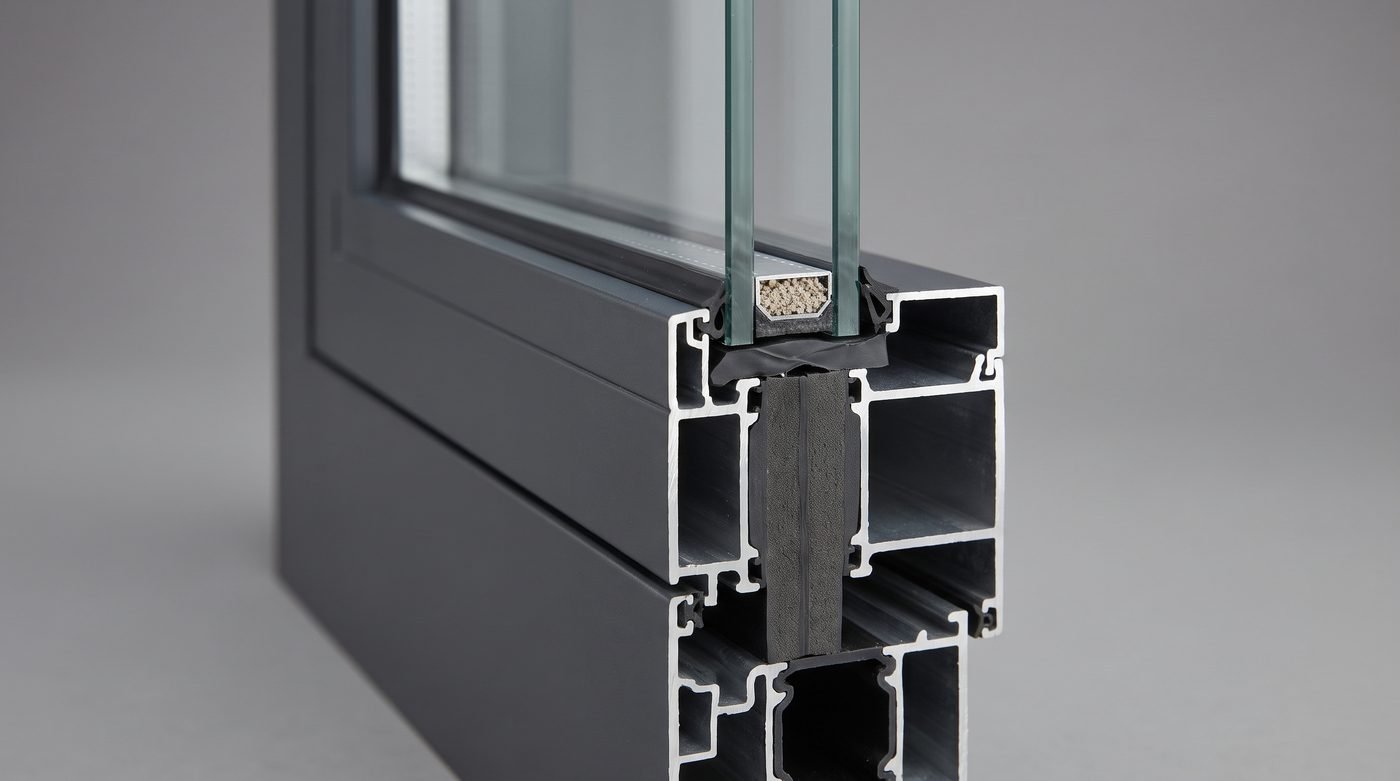
- The thermal break. The insulating strip inside the frame that stops the aluminium conducting heat from outside to in. Some frames have one and some don’t.
- The scope. Which items are actually included, and whether they are measured to the drawings.
- The hardware. The rollers, locks and hinges that decide whether a door still works in five years.
On our villa tender, the three installed quotes compared like this, on the 31 items all three of them priced:
| Same ≈ 255 m² of glazing | Quote A | Quote B | Quote C |
|---|---|---|---|
| Price, ex-VAT | ≈ AED 375,000 | ≈ AED 205,000 | ≈ AED 245,000 |
| Average per m² | ≈ AED 1,500 | AED 800 | ≈ AED 950 |
| Profile system named? | Yes | Extruder named, system series given | Only for the sliding doors |
| Glass as quoted | 28 mm double glazed, tinted | 28 mm double glazed, low-E | 24 mm double glazed, no coating stated |
| Glass the drawings asked for | 32 mm low-E double glazed, thermally broken frames | ||
| Thermal break stated? | No | Yes | No |
Over the full job, Quote A cost almost twice as much as Quote B. Quote C looked cheapest of all only because it left out the pivot doors and the skylights. Not one of the three quoted exactly what was drawn.
What does “one rate per square metre” hide?
Quote B priced almost everything at a single AED 800/m²: fixed curtain wall, sliding doors, hinged doors and windows with opening vents. That makes it easy to read and easy to compare. It also can’t be right.
A fixed pane is a frame, glass and gaskets. A sliding door adds a heavy sash, a sill track, rollers sized for the weight of the glass, interlocks, a multi-point lock and handles. Every installer and system house we know prices them separately. On this tender, the other two installers charged anywhere from about 15% more to more than three times as much per m² for sliding doors as Quote B did.
When a sliding door is priced like fixed glass, one of three things happens. The hardware is downgraded to make the number work. The difference comes back as a “variation” once you are committed. Or the installer loses money and the job slows down. None of them is good for you.
How to check: ask for the rate per m² by item type. If fixed glass, sliding doors and hinged doors all cost the same, ask what hardware each one includes, and get the answer in writing.
How can you tell if the glass has been downgraded?
Glass is the largest single cost in most glazing jobs, and the easiest place to save money without you noticing. The drawings for our villa called for 32 mm low-E double glazed units. The three quotes offered 28 mm tinted, 28 mm low-E and 24 mm with no coating mentioned.
In Abu Dhabi that difference isn’t cosmetic. Most of the cooling load through a window is solar heat coming through the glass, and controlling that is what low-E and solar-control coatings are for. A unit with no coating can look the same on the day it is fitted and cost you on every cooling bill after. It may also fall short of the energy requirements the building has to meet: in Abu Dhabi, Estidama’s Pearl Building Rating System, and in Dubai, Al Sa’fat (see our Al Sa’fat and Estidama glazing guide). For more on why the glass does most of the work, see solar-control glazing vs external shading.
How to check: the quote should state, for every item, the full glass make-up (for example “6 mm low-E toughened + 16 mm spacer + 6 mm clear toughened”), the coating by product name, and the glass manufacturer. “28 mm double glazing” on its own says almost nothing. Ask for the glass’s U-value and solar heat gain coefficient (SHGC) from the manufacturer’s data sheet.
What should you look for in what a quote leaves out?
The cheapest-looking quote on our tender, Quote C at about AED 245,000, didn’t price the two pivot entrance doors or the three roof skylights: about 75 m², or nearly a quarter of the glazed area. These are also the most expensive items per m² on the job. Add them back at any reasonable rate and it stops being the cheapest quote.
The same quote measured one pair of windows at 4.0 m tall where the drawings show 2.8 m. That error went the other way and overcharged by a few thousand dirhams. Quote B left out the fixed glass panel around one of the pivot doors, and measured the other pivot door almost 900 mm shorter than drawn.
Mistakes like these aren’t always deliberate. Tenders are priced fast. But your contract will be for what the quote says, not what the drawings say.
How to check: number every window and door on the drawings, then tick each one off against the quote. Check the width, height and quantity of each. If a position is missing, ask for it to be priced before you compare totals.
Does a more expensive quote mean a better job?
Not automatically. Quote A, the dearest at about AED 540,000, named its systems for every item and used a branded hardware range. That counts for a lot. It also:
- charged the glass above one sliding door twice: once as a separate fixed panel and again by pricing the door at the full 4 m height. That’s around AED 16,000 too much;
- priced a standard hinged side door as a premium pivot door, around AED 8,000 more than the drawing asks for;
- stated no thermal break, and quoted thinner tinted glass than the drawings called for.
A high price buys you nothing unless the quote is also right. Check the most expensive quote just as carefully as the cheapest.
How much of the price is the aluminium itself?
On the same villa we also asked two European system houses to price the aluminium and hardware alone: unpainted, unglazed, unfabricated, ex-works. On the shared items both came to roughly the same figure, and that figure was more than half of Quote B’s complete installed price.
That leaves under half of Quote B’s price to cover powder coating, the glass, cutting and assembly, delivery, installation, sealants and the installer’s overhead and margin. With a tested European system, the sums don’t work. A quote at that level is almost certainly built on a different, cheaper profile. Cheaper profile can be perfectly serviceable for some jobs. But you should know that’s what you’re buying, and the quote should say so.
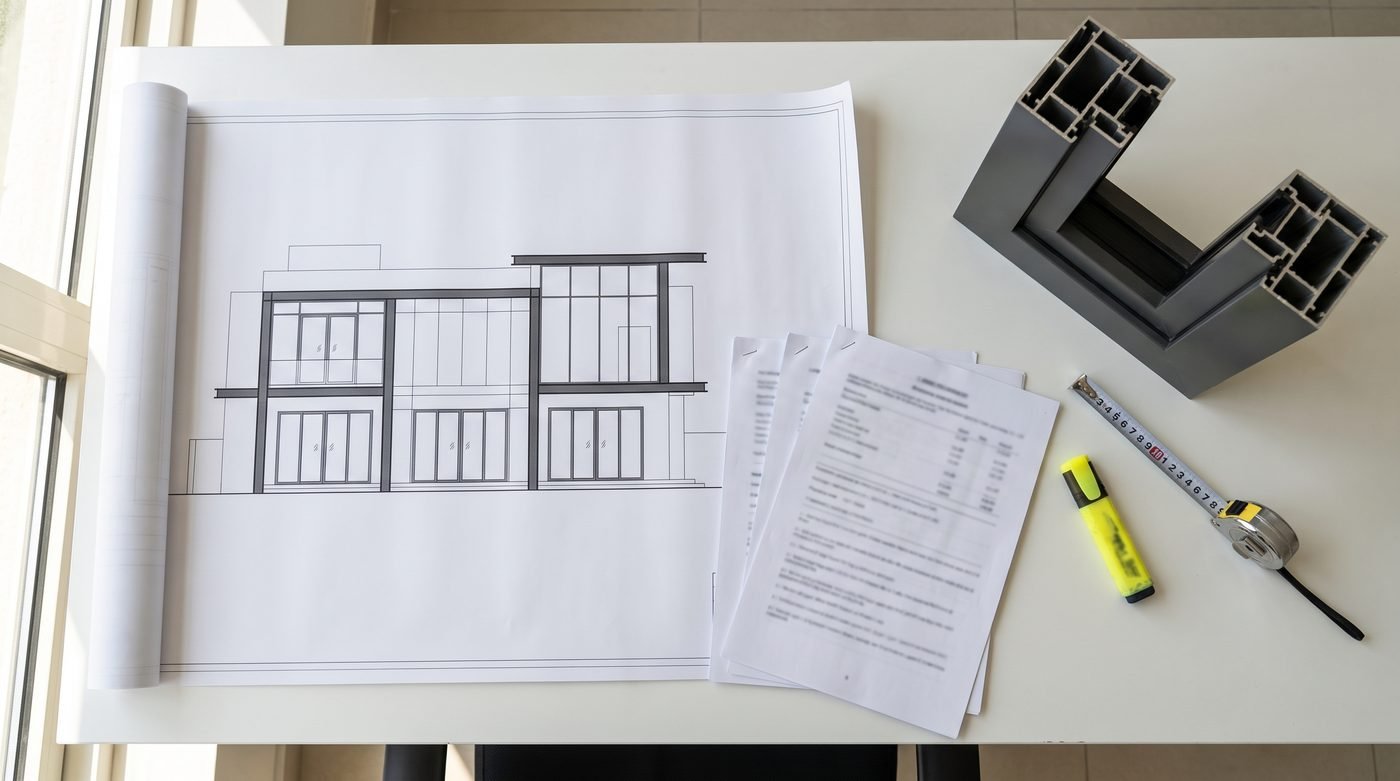
What should every aluminium glazing quote state?
Use this checklist on every quote you receive, ours included. If a line isn’t answered, ask before you sign.
| Check | What a good quote says | Warning sign |
|---|---|---|
| Profile system | System house and series for every item type | “Aluminium curtain wall”, no brand or series |
| Thermal break | Stated, with the system’s frame U-value | Not mentioned |
| Glass make-up | Every pane: thicknesses, toughened or laminated, coating by name, manufacturer | “28 mm DGU” only |
| Glass performance | U-value and SHGC from the manufacturer | “High performance” with no numbers |
| Rates by item type | Different rates for fixed, sliding, hinged, pivot and skylight | One rate for everything |
| Hardware | Brand and range for locks, rollers and hinges | “Standard accessories” |
| Scope against drawings | Every drawing reference listed with its size and quantity | Items missing, or sizes that don’t match |
| Skylights and overhead glass | Laminated inner pane stated | Same glass as the walls |
| Exclusions | Short, specific list | Long list that removes things you assumed were included |
| Validity and variations | A realistic validity period, variations priced at the quoted rates | Validity of a few days, open-ended variation terms |
| Warranty | Separate terms for frame, coating, glass seal and hardware | One line, or maintenance only |
What we do differently
Every LAA quote names the system for each item, lists the full glass make-up and its performance, prices fixed, sliding, hinged and pivot items separately, and references every position on your drawings by its own number. If we think the drawings call for more than the room needs, we say so and show the saving. We would rather that than quietly quote something thinner.
If you already have quotes in hand and want a second opinion, send them to us. We’ll go through them against your drawings and tell you what each one includes and what it leaves out, whether or not you end up working with us.